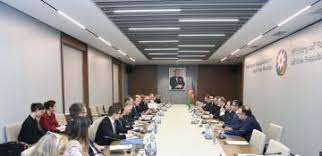
On 6 November 2025, the Ukrainian government formally submitted a draft law on the language of education to the Hungarian government, a move that signals an important turning-point in the long-standing diplomatic and educational dispute between Ukraine and Hungary. As announced by Ukrainian Deputy Prime Minister for European and Euro-Atlantic Integration Taras Kachka, the draft addresses five out of eleven demands that Hungary had previously advanced with respect to the rights of the Hungarian minority in Ukraine.
This submission comes at a time when Ukraine is under significant pressure—both internally and externally—to align its educational and minority-rights policies with European standards, and when Hungary continues to leverage minority-language issues as part of broader geopolitical bargaining. In what follows we unpack the context, substance, stakes and potential outcomes of this development.
Historical background: language, identity and education in Ukraine
The education-language issue has been at the centre of Ukraine’s domestic policy and international diplomacy for several years. Key points:
- Ukraine’s 2017 law on education mandated that from the fifth grade onward, Ukrainian must be the primary language of instruction in state schools, while schooling in minority languages beyond primary school was heavily restricted.
- As a consequence, ethnic minorities, including the Hungarian minority concentrated chiefly in the western region of Zakarpattia Oblast, raised serious concerns that their rights to education in their mother tongue were being eroded.
- In particular, Hungary consistently framed the issue as not only educational but also as a minority-rights and diplomatic matter: Budapest warned that Kyiv’s policy on Hungarian-language schooling might hinder Ukraine’s integration into the European Union and the North Atlantic Treaty Organization (NATO).
- Ukraine, for its part, stressed the importance of the state language for national unity and reform, especially in the context of war and the ongoing Russian aggression. At the same time it has tried to balance minority-language rights with the need to strengthen Ukrainian as the common language.
- In December 2023, Ukraine adopted a law “on national minorities (communities)” which restored some rights for minority-language education and aligned more closely with advice from the Venice Commission.
Thus, what we are seeing now is not a new dispute so much as a further stage in a protracted process of negotiation and recalibration.
What’s in the draft and what has been offered
According to Kachka’s statement, the draft submitted to Hungary “partially takes into account” Hungary’s demands regarding language policy in schools. Some specific points:
- Hungary had set out an 11-point list of demands concerning the Hungarian minority’s educational and language-use rights in Ukraine: these include the restoration of full “Hungarian-language school” status, the possibility of Hungarian-medium high-school diplomas, broader use of Hungarian in public life, etc.
- Ukraine says that the draft addresses five of these eleven demands. It has not publicly specified which five.
- Kachka also provided statistical background: he noted that of approximately 100 Hungarian-language schools in Ukraine, around two-thirds teach primarily in Hungarian with some subjects in Ukrainian; in the remaining, instruction is mostly Ukrainian with several key disciplines taught in Hungarian.
- Kachka’s comment: “Today, de facto, we fully cover the request of the Hungarian community for education that satisfies their interests.”
- Importantly: Kyiv conveyed that if Hungary accepts the draft, then Ukraine stands ready to submit the bill to its parliament (the Verkhovna Rada) for consideration.
Why this matters — educational, diplomatic and strategic stakes
This development is not only about schoolchildren and curricula. It carries multi-layered significance:
1. Minority rights and education as identity issues
Language and education lie at the heart of cultural identity for national minorities. Ensuring that Hungarian-speaking communities in Ukraine can access schooling in Hungarian (or with Hungarian-language instruction) is not merely a matter of pedagogy; it is about preserving heritage and sustaining community cohesion. Prior assessments by minority-rights groups warned that tighter constraints on minority-language education could “put at risk the survival of minority schools, the proficiency in the minority language and thus even the linguistic identity of the minority”.
2. Diplomacy and bilateral relations
For Hungary, the language-education issue is a key lever in bilateral relations with Ukraine. Hungary has repeatedly used the Hungarian-minority rights issue to stall Ukraine’s further integration into EU/NATO frameworks, arguing that Kyiv must first comply with commitments to minority protection. From the Ukrainian side, resolving this dispute is important for normalising relations with a neighbour and for removing one hurdle in its path of Euro-Atlantic integration.
3. EU integration and reform signalling
Ukraine’s push to align its education and minority-rights policies is not only bilateral but also multilateral. The EU and Council of Europe bodies have repeatedly emphasised that respect for minority-language rights is a key part of accession criteria and democratic standards. By submitting this draft, Ukraine signals to Brussels and other partners that it is engaged in reforms and willing to negotiate sensitive issues.
4. Domestic-policy balancing act
On the home front, Ukraine faces the challenge of balancing the need to promote the state language (especially given the war and national-security context) with international obligations and minority rights. Over-emphasising the state language risks alienating minorities and stoking internal tensions; conversely, loosening state-language requirements too much could generate backlash from those who view national-language consolidation as crucial. This draft law is therefore part of this delicate internal balancing.
5. Precedent and ripple effects
How this issue is resolved may have implications beyond the Hungarian minority alone. Other ethnic minorities in Ukraine (such as Romanian, Polish, Slovak) are also watching closely. The way Ukraine regulates minority-language instruction sets a precedent for its overall approach to multi-ethnic education in a state under wartime stress.
The sticking points and outstanding uncertainties
Despite the progress indicated by the draft submission, several major uncertainties and risks remain:
Which demands are included — and which are excluded?
Ukraine says five of the eleven demands are addressed, but has not to date published full details of which ones. Hungary may judge that the remaining six are still too critical to ignore and may hold out for more concessions. Without knowing exactly the “five” used, it is impossible to assess how meaningful the concessions are.
Timing and response from Hungary
Kachka said Ukraine expects a response “in the coming days”. But diplomatic processes often drag on—Hungary may delay or use the time to extract further demands, or attach conditions. The delay will affect Ukraine’s next steps, including whether the draft proceeds to parliament.
Legislative and implementation challenges
Even if Hungary approves, the draft must still pass Ukraine’s parliamentary process. Legislation must then be implemented on the ground: teacher training, curricula, textbooks, school-language transitions, monitoring of minority-language schools. Past reforms have sometimes lagged in implementation. For example, while Ukraine’s 2023 law on national minorities was praised, questions remained over how quickly its provisions would take effect.
Domestic political resistance
In Ukraine, there may be political resistance from groups who feel that minority-language concessions weaken national cohesion or undermine the primacy of Ukrainian. On the Hungarian side, minorities in Ukraine may feel that the concessions do not go far enough, creating disillusionment or renewed tension.
Geopolitical usage
Hungary has been using the minority-rights issue as a bargaining chip in Ukraine’s EU/NATO integration and in broader Hungary–EU relations. For Ukraine, settling this issue could remove a barrier—though Hungary may choose to keep raising it or shift to new demands. Recent reporting shows the EU views the Hungarian-Ukraine language row as among the main obstacles to Ukraine’s accession progress.
Possible outcomes and scenarios
There are several plausible scenarios for how this could play out:
Scenario A: Hungary accepts the draft swiftly.
If Hungary signals acceptance (or at least conditional acceptance) of the five-point draft, Ukraine can move the legislation to parliament, pass the law and begin implementation. This would mark a diplomatic breakthrough, enhance Ukraine’s standing with Brussels, ease one of Hungary’s blocking positions, and provide a morale boost in Kyiv. It might also encourage other minorities in Ukraine and improve inter-ethnic relations in regions like Zakarpattia.
Scenario B: Hungary rejects or delays the draft, demands more.
Hungary might judge the draft insufficient and press for all eleven demands or additional guarantees. It could delay response, tie acceptance to other unrelated issues (e.g., Hungary’s demands in the EU context), or signal that the minority-rights matter remains unresolved. In this scenario, the status quo persists: Ukraine remains blocked on Hungary’s agenda and the educational dispute continues.
Scenario C: Partial acceptance plus protracted negotiations.
Hungary accepts the draft in principle but demands a monitoring mechanism, or staged implementation, or other concessions. Implementation takes time, and Hungary demands regular reporting or involvement in oversight. Ukraine might pass the law, but practical implementation lags or faces resistance. The dispute remains in limbo.
Scenario D: Legal/implementation failure.
Even if the draft passes, schools may struggle with resources, teachers, or regional execution. Minority communities might view the changes as insufficient or badly implemented. This could lead to renewed protests, international criticism, or further diplomatic tension, undermining the positive potential.
Implications for Ukraine’s education policy and minority rights
From a policy perspective, this development has several implications:
- It may mark a shift from top-down imposition of state-language instruction toward more pluralistic accommodation of minority languages in the education system.
- It sends a signal to Ukraine’s diaspora and minority youth that their language and identity matter within the national framework—potentially improving social cohesion and reducing alienation.
- It ties educational reform to international integration and diplomacy: education becomes not just domestic policy but part of Ukraine’s European trajectory.
- It underscores the need for robust implementation: whether textbooks, teacher training, school infrastructure, minority‐language pedagogy, oversight and monitoring of minority-language schools.
- It highlights the interplay between language policy and geopolitics: the choice of instructional language is never just about pedagogy but about identity, sovereignty, state-building, regional relations and international norms.
Challenges ahead
Several obstacles remain:
- Translation into practice: legislation is only the first step. Ensuring Hungarian-language (or Hungarian-medium) schooling, teacher recruitment, supplying materials, auditing quality—these are complex tasks, especially in a war-affected country with stretched educational capacity.
- Regional disparities: The Hungarian minority is concentrated in western Ukraine (Zakarpattia). Ensuring uniform implementation across different schools, rural versus urban, resource-rich versus resource-poor, will be a challenge.
- Monitoring and oversight: Ensuring that the rights granted on paper translate into real outcomes requires transparent monitoring. If Hungary or minority organisations believe implementation is lagging, the dispute could reignite.
- Domestic political dynamics: Ukraine’s war-time context puts enormous emphasis on national unity and the Ukrainian language as a state-building tool. Some groups may resist any perceived “softening” of the state-language regime. Balancing these pressures remains delicate.
- External leverage: Hungary may continue to use minority‐language rights as a leverage point in EU or NATO negotiations, or link them to other bilateral demands. Ukraine will need to manage that diplomatic dynamic carefully.
- Broader minority dynamics: The Hungarian minority case may set precedent for other minorities (Romanians, Slovaks, Poles) in Ukraine. Ensuring that rights are perceived as fairly applied across the board will be important for equality and avoiding new grievances.
Conclusion
The submission of this draft law from Ukraine to Hungary is a significant milestone in a dispute that has endured for years. It shows that Kyiv is engaging diplomatically and willing to modify its policy on minority-language education. For Budapest, it presents a possible pathway to securing some of the Hungarian minority’s demands within Ukraine. For Brussels, it offers hope that one of the obstacles to Ukraine’s European integration might be moving toward resolution.
Yet, the key question is not whether the draft has been submitted, but what happens next: Will Hungary accept the draft? Will Ukraine pass and implement the law? Will implementation satisfy the Hungarian minority and Hungary’s government? Will the education system in Ukraine absorb the changes effectively?
If all goes well, this could be the turning point that unlocks better bilateral relations, improves minority‐language rights in Ukraine, and strengthens Ukraine’s European trajectory. But if the negotiation stalls, implementation falters, or Hungary remains unsatisfied, the dispute may persist—and Ukraine may continue to face a diplomatic hurdle in its EU/NATO pathway.
In the coming weeks and months, the focus will be on Hungary’s response, Ukraine’s parliamentary timetable, and the mechanics of implementation: teacher training, curricula, minority-language classrooms, and monitoring. For the Hungarian minority in Ukraine, for bilateral Hungarian-Ukrainian relations, and for Ukraine’s reform and European agenda, this moment is one to watch closely.
This article has been prepared in English, and seeks to examine the recent development — Ukraine’s submission of a draft education-language law to Hungary — in broader context, exploring the history, substance, stakes, challenges and possible outcomes.