Introduction
In a striking policy reversal, the U.S. Department of Education has announced it will terminate about $350 million in discretionary grant funding for multiple programs that support Minority‑Serving Institutions (MSIs).
These programs have long served as critical financial lifelines for colleges and universities that enroll high numbers of Hispanic, Black, Native American, Asian American / Pacific Islander, and other minority students. The Department says that eligibility criteria based on racial or ethnic enrollment levels are now considered unconstitutional, and thus must be discontinued.
The decision represents a major shift in federal higher education policy, with wide reverberations for educators, students, civil rights groups, and lawmakers.
What Exactly Has Changed
To understand the full scope of this change, here are the key components of what the Education Department has done:
- Grant programs ended: A number of discretionary grant programs that award funds to institutions with thresholds of minority enrollment are being canceled.
- Amount affected: The total funding paused or discontinued is about $350 million for fiscal year 2025.
- Large portion for Hispanic‑Serving Institutions (HSIs): More than $250 million of that sum was earmarked for HSIs. These are institutions where at least 25% of undergraduates are Hispanic.
- Other minority group programs also targeted: Programs for Predominantly Black Institutions (PBIs), Asian American and Native American Pacific Islander‑Serving Institutions (AANAPISIs), and other minority‑serving designations are also affected. For example, some grants that require 40% Black student enrollment are included.
- “Mandatory” funding unaffected for now: About $132 million in mandatory grant funding (i.e.
- funding required under statute) will still be released. These are programs that have fixed requirements or legislative mandates.
- Legal rationale: The Department’s decision cites constitutional concerns, specifically that tying grant eligibility to racial/ethnic enrollment thresholds may violate equal protection principles. The move is connected to a lawsuit filed by Tennessee and the group Students for Fair Admissions, which challenge HSI program eligibility criteria.
Background: Purpose of MSI Grants & Their Importance
To appreciate the magnitude of this change, one must understand what MSIs are and why federal grant programs for them have existed.
- What are Minority‑Serving Institutions (MSIs)?
MSIs is a collective term for institutions of higher education that serve high proportions of students from racial or ethnic minority groups, often including Hispanic‑Serving Institutions (HSIs), Historically Black Colleges and Universities (HBCUs), Tribally Controlled Colleges and Universities (TCCUs), Predominantly Black Institutions, Asian American / Native American Pacific Islander‑Serving Institutions, and others. They play a crucial role in serving first‑generation, low‑income, underrepresented students.
- Why these grants exist:
The grant programs have two main goals: to help rectify disparities in higher education related to access, infrastructure, and resources, especially in communities historically underserved; and to enhance student outcomes—retention, completion, research capacity, faculty support, etc. Institutions that serve many minority or underprepared students tend to have greater challenges in terms of funding, facilities, faculty, research infrastructure, and student support services. MSI grants are intended to help close those gaps.
- Legislative history:
Some of these programs are longstanding, created under various acts and policies over decades. For example, the HSI program was established in 1998 to support colleges where Latino students were going to college and graduating at lower rates than their peers.
The Legal Challenge
A pivotal factor in this policy shift is the legal landscape:
- Lawsuit by Tennessee & Students for Fair Admissions:
The state of Tennessee and the nonprofit Students for Fair Admissions filed suit challenging the Hispanic‑Serving Institutions programs. They argue that having a rigid enrollment threshold (e.g., 25% Hispanic undergraduates) for eligibility constitutes unconstitutional discrimination because it uses race or ethnicity as a criterion.
- Justice Department’s stance:
The U.S. Justice Department recently declined to defend some of these programs in the lawsuit, stating in a July memo that the enrollment threshold requirement violates the Constitution.
- Department of Education’s new interpretation:
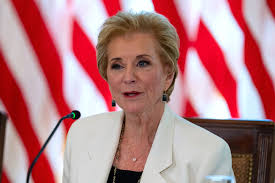
Following these legal developments, the Education Department under Secretary Linda McMahon has determined that the eligibility requirements based on race or ethnic composition present constitutional risk, so it is discontinuing discretionary MSI grant programs that employ such criteria.
Reactions and Stakeholder Voices
The decision has drawn strong responses from various sectors.
- Higher education institutions and leaders:
Many colleges and universities that are MSIs have expressed concern over the loss of funding, which they say supports critical student services, research initiatives, infrastructure, and programs that help underprepared or low‑income students succeed. In Hawai‘i, for example, colleges could lose millions of dollars—some used for nursing doctoral programs, student research stipends, support for STEM fields for Native Hawaiian students, etc.
- Civil rights groups and advocacy organizations:
Groups such as EdTrust‑West have condemned the cuts as “regressive,” warning that these actions undermine racial equity in education and dismantle progress made over decades. They argue that the justification of “neutrality” or “merit” ignores structural and historical inequalities.
- Lawmakers:
Opposition has come largely from Democratic members of Congress, who argue that the cuts jeopardize educational opportunity for marginalized communities.
- Supporters of the change:
The Education Department and its leadership assert that the grants’ eligibility rules based on race or ethnicity are unconstitutional and that future funding should instead focus on underprepared or under‑resourced institutions irrespective of racial or ethnic enrollment thresholds. They maintain that merit and equal protection must guide federal funding.
Implications: What It Could Mean
This policy change has numerous practical, legal, social, and educational implications. Here are some of the most important aspects to consider.
- Financial strain on MSIsWithout these discretionary grants, many MSIs will lose critical financial resources. These funds often support:
- Student support services (tutoring, mentoring, advising)
- Building or modernizing facilities and equipment
- Research infrastructure and capacity
- Faculty development, recruitment, retention
- Programs targeting underserved students (e.g. first‑generation, low income)
- Impact on student outcomesThe services funded by MSI grants have in many cases been integral to helping students who face systemic barriers persist and graduate. Cutting these funds could widen gaps in retention, graduation rates, transfer, preparation for advanced study, and entry into STEM and other in‑demand fields. Students who are first‑gen, low income, or from historically underrepresented communities will likely feel the greatest effects.
- Legal precedent and future fundingThis decision could set precedent for future interpretations of what is constitutionally permissible regarding race‑ and ethnicity‑based eligibility criteria. Other programs that depend on similar criteria may also be on shakier legal ground. It could lead to more lawsuits, policy changes, or shifting of criteria from race to race‑neutral proxies (like poverty, first‑generation status, or “underprepared” measures).
- Policy and political backlashGiven the strong reactions from institutions, advocacy groups, and lawmakers, there may be legislative attempts to restore funding or pass new laws that codify support for MSIs in ways that survive constitutional scrutiny. Political debates over affirmative action, equity, and the role of federal funding in correcting educational disparities are likely to intensify.
- Shifts in how “underserved” gets definedThe Department has signaled interest in repurposing the funds toward institutions serving underprepared or under‑resourced students without using rigid race or ethnic thresholds. If this path is pursued, it may require new measurement tools, oversight, and criteria. But this could also shift support away from some institutions that qualified under the old system but may not under new definitions, or vice versa.
Criticisms & Concerns
While supporters of the cuts argue for constitutional propriety and fairness, there are strong criticisms:
- Ignoring history and context: Critics say that while race‑based eligibility criteria might look discriminatory on paper, they address historical and ongoing inequities. Institutions with large minority student populations often have less access to funding, endowments, facilities, etc. Removing race‑based criteria without considering these disparities may perpetuate inequity.
- “Race‑neutral” criteria may be less effective: Alternative criteria (such as poverty or first‑gen status) are helpful but may not fully capture the specific disadvantages that minority communities face (e.g., segregation, cumulative disadvantage, bias, etc.).
- Risk of undercutting institutional identity and mission: Many MSIs were founded to serve minority communities or have mission statements aligned with supporting minority students. Funding tied to minority student populations supports those missions. Removing that link may diminish their ability to carry out those missions robustly.
- Uncertainty for institutions: Many MSIs are now in limbo—uncertain whether funds they expected will be released, how the cuts will affect ongoing programs, what plans they need to adjust. The policy change seems to have been announced without detailed guidance on how to transition or what criteria the “repurposed” funds will use.
Broader Context
To situate this policy in broader developments:
- Shifts in higher education policy under current administration: This move is consistent with a broader push by the current administration to reexamine race‑conscious programs in federal funding and admissions, under the banner of “neutral” criteria and equal protection.
- Legal climate around affirmative action: The U.S. Supreme Court in recent years has limited race‑based affirmative action in admissions. Many legal challenges have extended to other domains (such as grants, employment, contracting). This decision is aligned with that trend.
- Historical support under previous administrations: MSIs have received increasing support under recent administrations (e.g. under the Biden‑Harris administration), via grants aimed at improving infrastructure, student success, research capacity. The current cuts represent a reversal of that trajectory.
- Equity vs merit debate: Central to this change is a philosophical and political debate: what counts as merit, whether and how race or ethnicity should factor into public policy, and how to balance equal protection vs correcting systemic disadvantage.
Potential Paths Forward
Given the complexity of the situation, there are several potential remedies or alternative approaches being discussed:
- Legislation to protect MSI fundingCongress could pass laws that explicitly authorize and protect funds for MSIs, possibly with revised eligibility criteria that are less vulnerable to constitutional challenge. Clear statutory authorization might strengthen legal defensibility.
- Redefining eligibility criteriaTransitioning from race‑based thresholds to more race‑neutral metrics, such as:
- Percentage of students from low‑income or high‑poverty backgroundsFirst‑generation college student populationUnderproduction of certain student populations (e.g., STEM degrees among underrepresented groups)
- Geographic or regional disadvantage
- But careful design is required to ensure that the institutions that serve minority populations still qualify and receive meaningful support.
- Legal challenges and judicial decisionsSome MSIs or civil rights groups may challenge the Education Department’s policy changes, arguing either that the statutory language of existing laws protects the programs, or that terminating them is beyond executive authority without Congressional action. Outcomes in courts could force modifications or reversals.
- State and institutional responsesSome states may step in with their own funding to make up for cuts, or institutions may seek private philanthropy, partnerships, or creative budgeting to maintain student support programs. However, private sources rarely match the scale or consistency of federal grants.
- Monitoring impact and data collectionAs changes roll out, it will be important to closely monitor how student outcomes are affected, especially for the most vulnerable students. Data will be crucial for evaluating whether race‑neutral criteria are achieving equity, and whether gaps are widening or narrowing.
Case Examples
Hawai‘i
- Thirteen colleges in Hawai‘i, including all University of Hawai‘i campuses, were among those that qualified for MSI grants under the old criteria. Because of the policy change, significant funding losses are expected. Some programs—such as nursing doctoral programs, student research stipends, STEM initiatives for Native Hawaiians—are at risk.
California
- Advocacy group EdTrust‑West noted that dozens of public MSIs in California serve large populations of first‑generation, low‑income, and racially diverse students who rely on MSI funding for access, support, and student success programs. Cuts threaten both such institutions’ operations and the students they serve.
Legal & Constitutional Questions
Some of the key legal questions that are central to this issue:
- What counts as “discrimination” under the Constitution? The U.S. Supreme Court has in many contexts held that race‑based governmental action must undergo strict scrutiny: it must serve a compelling interest, be narrowly tailored, and be the least restrictive means. The question is whether having eligibility criteria based on race or ethnic enrollment thresholds passes that scrutiny.
- Statutory vs constitutional authority: Some MSI programs are authorized by Congress in statutes that include race‑ or ethnicity‑based thresholds. If the statute is explicit, the executive branch’s power to unilaterally cancel the program may be limited. Courts may interpret statutory language to determine whether Congress intended that threshold, or whether it can be reinterpreted.
- Precedents from recent court rulings: Several cases in the Supreme Court and lower courts involving affirmative action in admissions, contracting, and federal programs will be relevant. The recent trend has been increasing scrutiny and limitations on race‑conscious criteria.
- Possible outcome of lawsuits: The lawsuit by Tennessee and Students for Fair Admissions could lead to a judicial ruling that forces either reinstatement, modification, or further restrictions on MSI programs. If a court strikes down the relevant parts, the grants may stay ended; if it finds statute overrides or that they are constitutional, then they may be restored.
What’s Next: Unanswered Questions
Although the decision has been made, many details are not yet settled, and there are open questions that will shape how this shift looks in practice.
- How exactly will funds be “repurposed”? The Education Department has said it wants to redirect support to underprepared or under‑resourced institutions without using rigid race‑based thresholds. But specifics (criteria, amount, process) have not been fully detailed.
- Timeline for cuts or transitions: It is not clear precisely when all funds will be discontinued, which grants are already committed, and how ongoing projects will be affected. Institutions that budgeted assuming certain grant renewals may be in trouble if plans change without notice.
- Impact on students: The real effects on student support, research opportunities, retention/graduation rates remain to be seen, but are likely to be negative in many cases—especially for marginalized students who rely heavily on services funded through these grants.
- Legislative responses: Will Congress act? There is potential for legislative pushback or for new bills that try to preserve or reshape MSI support. But whether such legislation can survive the constitutional framework is another matter.
- Public sentiment and political implications: This decision comes in a period of intense public debate over how equity and race are addressed in public policy. How voters, institutions, and states respond may influence future elections and higher education policy nationally.
Conclusion
The decision by the U.S. Department of Education to end about $350 million in grant funding for Minority‑Serving Institutions marks a pivotal moment in higher education policy. It shifts the funding paradigm, emphasizes concerns about constitutional constraints, and raises profound questions about how the U.S. will support colleges that serve historically marginalized populations.
While supporters argue it aligns with legal requirements and principle of equal treatment, opponents warn it undermines years of progress, threatens educational equity, and ignores the persistent barriers facing minority students and minority‑serving institutions.
What happens next depends heavily on how Congress responds, how courts rule, and how institutions adapt. The stakes are large—not just in dollars, but in the futures of thousands of students whose educational opportunities depend on whether these funding streams survive or are replaced with other effective mechanisms.
If you like, I can also prepare an op‑ed style piece arguing for or against the decision, or compare this policy with analogous policies in other countries.Attach