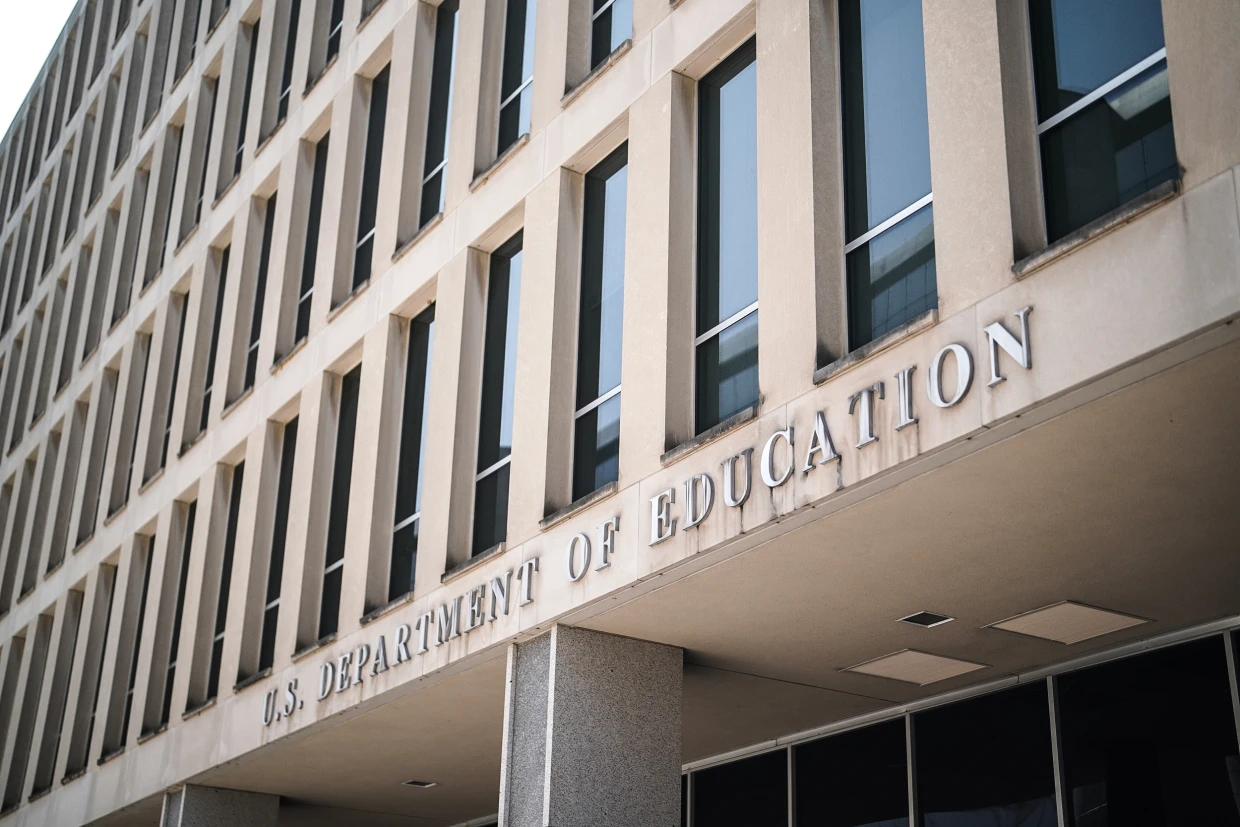
A federal judge has ruled that the U.S. Department of Education unlawfully altered automatic out-of-office email replies for set-aside employees during the 2025 federal government shutdown to blame Senate Democrats, finding the practice violated the First Amendment and the principle of a non-partisan civil service.
The decision, issued on 7 November 2025 by Christopher Cooper of the U.S. District Court for the District of Columbia, was the result of a lawsuit brought by the American Federation of Government Employees (AFGE). The union argued that career civil‐servants had been coerced or compelled, via their email accounts, to transmit partisan messages blaming “Democrat Senators” for the funding lapse.
The Facts of the Case
During the shutdown triggered by the failure to pass a continuing resolution on 1 October 2025, multiple federal agencies responded with automatic email replies from furloughed employees. In the case of the Department of Education, employees reported that their originally nonpartisan out-of-office templates were overridden by added language stating:
“On September 19, 2025, the House of Representatives passed H.R. 5371, a clean continuing resolution. Unfortunately, Democrat Senators are blocking passage of H.R. 5371 in the Senate which has led to a lapse in appropriations.”
Employees told media that they did not consent to the change, and some attempted to edit their automatic replies back but found them reverted or locked.
AFGE filed a complaint claiming the department had effectively used the federal workforce’s email infrastructure to broadcast a partisan talking point, thereby implicating workers’ free‐speech rights and breaching the nonpartisanship of the civil service.
The Legal Ruling
Judge Cooper wrote in his 36-page opinion that the federal civil service rests on the principle of non-partisanship, which ensures that career employees serve the public rather than serve as vehicles for partisan political messaging.
He held that:
- The government cannot force rank-and-file employees to disseminate political messages through their official accounts. “Political officials are free to blame whomever they wish for the shutdown, but they cannot use rank-and-file civil servants as their unwilling spokespeople,” Cooper wrote.
- The practice of editing out-of-office replies to attribute culpability to a political party crossed constitutional lines and violated First Amendment protections.
- The Department was ordered to remove the partisan language immediately from the email accounts of union members, and if it is “technologically impossible” to isolate only the union‐members’ accounts, Cooper signalled he would order the department to remove the language from all affected accounts.
Why It Matters
Several key implications emerge from this ruling:
- Protection of Civil Service Neutrality
The decision reaffirms that career federal employees are not mere instruments of partisan political messaging. The civil service exists — in part — to ensure that government administration remains above party politics. The judgment underscores that using employees’ official accounts to push partisan messages inherently undermines that neutrality. - First Amendment Implications for Government Employees
While government employees may have more limited free‐speech rights in their official roles, they are not stripped of First Amendment protections altogether. The court’s ruling shows that the government cannot commandeer official‐account messages to broadcast partisan assertions—especially not without consent or transparency. - Shutting Down Political Messaging via Agency Communications
The ruling signals to federal agencies that the channeling of political blame or campaign‐style language through bureaucratic communications may violate constitutional or statutory norms. The backdrop of the 2025 shutdown—heightened partisanship, frequent blame-shifting, and agency communications directed at the public—makes this especially salient. - Impacts on the Government Shutdown Narrative
The fact that the department’s messages attempted to attribute the shutdown to a political party rather than to the broader funding impasse highlights how communications during shutdowns can become weaponised. The ruling may limit such tactics going forward, which could change how agencies frame future shutdowns or funding crises.
Broader Context
The 2025 shutdown, one of the longest in U.S. history, sparked a flurry of partisan communications by federal agencies. Several departments—including the U.S. Department of Housing and Urban Development, the U.S. Department of Agriculture, and the Department of Education—used out-of-office messages and website banners to fault “Democrats” or “the radical left” for the lapse.
Compliance with the Hatch Act—federal law that restricts partisan political activity by federal employees—was also flagged as a concern. But ethics of these messages also extend beyond statutory violations, into core constitutional and administrative governance principles.
What Happens Next
Following the ruling:
- The Department of Education must provide a status update on compliance by early next week, according to the court order.
- The judge indicated willingness to expand the order to all employee email accounts if selective removal proves technologically or administratively infeasible.
- The case may prompt further scrutiny of agency communications during shutdowns or funding crises, and may lead to more litigation, oversight or regulation of how federal agencies handle messaging in politically charged contexts.
- Ethics groups and watchdogs will likely use the ruling to press for broader reform or enforcement of limits on partisan content in federal communications.
Potential Criticisms and Limitations
Despite the ruling’s clarity, there are a few caveats and critiques:
- Some may argue that agencies have a right to inform the public about the cause of a shutdown. The question is where the line lies between factual communication and partisan messaging.
- The decision is specific to the Department of Education and to the particular facts of the case; other agencies might claim different contexts or protocols.
- Technological or administrative burdens may slow full compliance, particularly if accounts are numerous or split across systems.
- Enforcement mechanisms remain complex—while the court can order removal of language, ensuring full and transparent remediation will depend on oversight and agency cooperation.
Conclusion
The ruling by Judge Christopher Cooper marks a significant reaffirmation of the principle that public servants—even during furlough or shutdown situations—cannot be turned into instruments of partisan messaging by their employing agencies. The Department of Education’s decision to revise out-of-office messages to blame Senate Democrats for the shutdown crossed constitutional lines, according to the court. The decision emphasises that nonpartisanship remains the bedrock of the federal civil service and that the First Amendment protects the integrity of government employees’ official communication channels.
As the federal government continues to navigate funding impasses, shutdowns, and political stand-offs, this decision will likely serve as a reference point for how agencies shape internal communications and public messaging. It may deter similar practices and encourage clearer separation between factual information and partisan advocacy in official government correspondence—and offers a reminder that even in times of crisis, constitutional and civil‐service principles endure.