As the U.S. Department of Education rolls out sweeping changes to how it handles diversity, equity, and inclusion (DEI), some of the most vulnerable students—those with combined hearing and vision loss, also known as deafblind students—are finding themselves caught in the crossfire. What may seem like a political or ideological fight has very real consequences:
loss of federal funding for critical programs, fewer supports for families and educators, and risks to the well‑being and development of children with deafblindness. This article examines which programs are threatened, how the anti‑DEI push factors in, the impact on affected students, and the broader legal and ethical questions raised.
What are the programs and what’s happening
For decades, various state‐level programs have existed to support students who are deafblind. These programs typically provide:
- Specialized training for educators in communicating and teaching children with both auditory and visual impairments.
- Assistive technology and other resources to help access education (e.g. tactile devices, specialized communication methods).
- Family support and connection, so parents of deafblind children can navigate schooling, medical, and social services, share resources, and build community.
- Tracking and state/regional coordination so that small populations of students (often quite dispersed) are still served properly.
These programs are federally supported, generally through grants, and federal funding has long played a vital role because deafblindness is rare and expensive to support.
However, recently, the Department of Education has halted or refused to renew funding for deafblind programs in eight states, citing concerns that grant applications contained language that violates new policy priorities, such as “divisive concepts,” or that they conflict with the administration’s focus on “merit, fairness, and excellence.”
The eight affected states include Wisconsin, Oregon, and Washington, and a consortium of New England states (Massachusetts, Maine, Connecticut, New Hampshire, Vermont).
Funding that had been expected to continue through September 2028 will now stop, with letters sent to local officials giving them just seven days to ask for reconsideration.
Why the funding is being cut: The DEI connection
The Department of Education’s rationale for cutting or refusing renewals hinges heavily on a newly aggressive posture toward diversity, equity, and inclusion initiatives. Key points:
- Some grant applications included statements or strategic plans about addressing “inequities, racism, bias,” or about supporting marginalized communities and disability groups. For instance, the Oregon DeafBlind Project’s grant included reference to its commitment to addressing inequities, racism, bias, and its parent district’s plan to establish a “Center for Black Student Excellence.” The Education Department flagged that language as conflicting with its priorities.
- Other flagged language includes words like transition (referring to a student’s move from childhood to adulthood), privilege (used by parents in praising staff), or policies to ensure hiring includes minorities, women, and disabled veterans. The Department says such language may conflict with its interpretation of “fairness,” merit, or its policies on what constitutes “race‐conscious” or “privilege” language.
- The Department says it is no longer allowing “taxpayer dollars to go out on autopilot”—meaning grant renewals or funding that were once somewhat routine are now being scrutinized for whether they align with the current administration’s policy priorities.
Thus, what used to be fairly standard language about equity, inclusion, and addressing historic discrimination is now being treated as suspect, even potentially disqualifying.
The result is that some of the very programs aimed at helping marginalized or disabled students are being identified as in conflict with policy, sometimes because they use terms associated with DEI work.
Who is affected
The impact of these funding cuts will be felt by:
- Students who are deafblind: In the eight states with funding halted, over 1,000 such students are directly served by these programs. Nationally, the number is about 10,000.
- Families of those students: Support services, retreats, family connections, parent trainings—all are under threat or being canceled.
- Educators and specialist staff: Teachers and specialists who work in deafblind education rely on these grants for professional development, coaching, and for tools (assistive tech, etc.). Without those, the quality and availability of instruction will decline.
- States and local agencies that coordinate these programs—often small, under‐resourced, and reliant on federal grants to maintain key services for rare populations.
The effects: short‐term and long‐term
Short‑term disruptions
- Cancellation of events like parent retreats, which provide not just information but community, resource exchanges, emotional support. For example, a scheduled January retreat in Oregon has been canceled.
- Loss of assistive technology and medical or educational devices that help students access classroom content. Some technology purchases may be delayed or canceled.
- Fewer trainings for educators; fewer opportunities for teachers to learn best practices for working with deafblind students.
Long‑term risks
- Educational decline: Without specialized support, the learning outcomes of deafblind students—already challenged due to the dual sensory loss—may worsen. Access to literacy, communication, social participation could be deeply affected.
- Isolation: Deafblind students often depend on well‑trained educators and support networks. Loss of services threatens both social and academic inclusion.
- Inequality magnified: Those students who have more private resources may find ways around some gaps; those without will be left further behind.
- Teacher shortages and retention problems: Specialized teachers need support, ongoing training, enough resources. If grants disappear, fewer people may enter or stay in this specialized field.
Legal, policy, and ethical questions
Legal challenges and civil rights
There are ongoing legal fights over the Department of Education’s new framework. Some lawsuits have contested guidance that threatens to cut federal funds for DEI programs, arguing that the definitions are vague, that they threaten free speech or run afoul of civil rights laws.
Also, the Individuals with Disabilities Education Act (IDEA), and other disability rights laws, guarantee a Free Appropriate Public Education (FAPE) and protections for students with disabilities. Cutting funding for programs that serve deafblind students could undermine those guarantees.
Policy tensions: Merit vs Inclusion
One of the core arguments offered by the Education Department is that it is prioritizing “merit, fairness, and excellence,” and is wary of programs or language that it views as race‑conscious or privileging certain groups or identities.
The tension here is that support for students with disabilities—particularly rare or severe disabilities like deafblindness—is often inherently about inclusion rather than “merit” in the traditional sense. And equity often requires acknowledging disadvantage, difference, and the systemic barriers faced by certain students.
When the terms used to describe those programs (“equity,” “bias,” “inclusion,” “privilege”) are treated as taboo, the very ability to design responsive programs is in jeopardy.
Ethical concerns
There is a moral question: do we, as a society, want to have educational policies that potentially harm some of the most vulnerable in order to avoid ideological language or political controversy? For many advocates, the answer is no.
The dignity and rights of children who are deafblind are not marginal—they are central to any inclusive idea of education.
Broader context: The DEI rollback and its ripple effects
This is not happening in isolation. The recent DEI rollback includes:
- Department memos warning schools they may lose funding if they maintain DEI programs or use race‑based policies.
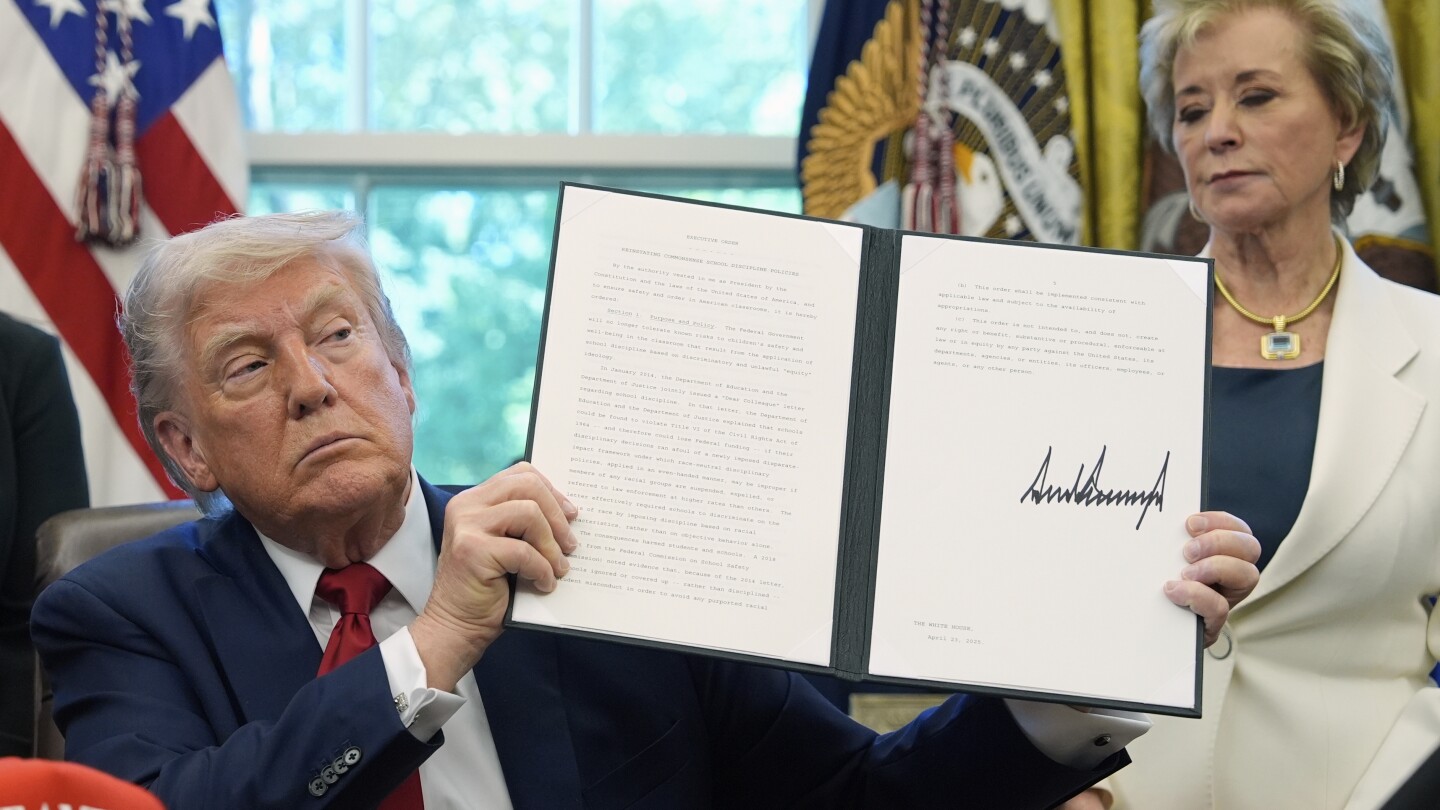
- Executive orders requiring schools to certify compliance with new definitions of what DEI may or may not include.
- Cuts to other special education grants and teacher training tied to DEI or equity. For instance, Part D grants under IDEA that cover training for Braille or interpreters have been cancelled in some cases.
In short, a wide array of supports for students with disabilities—including deafblindness—are being caught up in the broader ideological shift away from diversity/equity language and toward a narrower definition of what is permissible under federal education funding. Programs that once were standard are now being seen, in some eyes, as politically risky.
Stories from the ground
While statistical data and funding figures tell part of the tale, the human dimension is equally powerful.
- A parent in Washington, whose two children are served by the state’s deafblind program, said that the grant had provided both vital strategies for her sons’ educators and connection with other families. Without the funding, some of those services will vanish.
- Educators in Oregon spoke of loss of “lifeline” support for families—retreats, parent resource days, tech support, etc.—that the communities depend on. Picture a small group of parents in rural areas who rely entirely on state‑supported parent trainings to learn how to help their children communicate with the world. Without that, isolation and frustration deepen.
What could / must be done
- Advocacy and legal action
Legal advocates are already pushing back. Lawsuits contesting vague memos or claims about funding loss are underway. Continued legal pressure is crucial to clarify what DEI is and protect programs under disability law. - Congressional oversight and funding protections
Congress has the power to protect certain programs explicitly via statute, earmarks or appropriations, or to ensure that funding lines for deafblind education are protected from executive branch reinterpretation. - Transparency and clear definitions
Part of the harm comes from vagueness—what exactly is “divisive concept,” what’s forbidden, what language is acceptable. Clear guidelines would prevent chilling effects, where programs self‑censor or avoid useful work out of fear.- Continuity of services
Even where funding is in flux, states must plan how to maintain core services—especially for children who rely on assistive technologies, communication access, and trained specialists. Temporary bridges or emergency funds might help.- Engaging families and affected communities
Parents, students, disability advocates are among those most directly harmed. Their voices need to lead the conversation about what supports are essential and how to design policies that protect rights and ensure inclusion.
Conclusion
The rollback of DEI language, policies, and programs under the current Department of Education doesn’t just represent a shift in rhetoric—it has tangible, damaging effects on some of the country’s most vulnerable students.
Deafblind children, who depend on specialized services, educators, and supports funded through grants, are now facing program cancellations, lost resources, and increased risk of educational harm.
In policy debates, it is easy to get lost in semantics—“merit,” “fairness,” “divisive” versus “inclusive,” “equity.” But behind these words are children who need access, communication, and the chance to be educated fully. Where language becomes a barrier rather than a tool, democracy and educational justice lose ground. Protecting programs for students with hearing and vision loss is not only a matter of legal obligation or education policy—it is a moral imperative.