In a move rippling with ideological gravity and political bravado, former President Donald Trump has fastened his ambitions onto university accreditation — a domain historically distanced from federal meddling — as part of his larger stratagem to reconstruct the
American higher education framework. This provocative agenda underpins Trump’s enduring excoriation of academia, which he often brands as sanctuaries for progressive dogma that muffle contrarian conservative discourse
This exposition delves into the fabric of accreditation, Trump’s motivations in spotlighting it, the domino effects this might trigger across academic institutions, and the multifaceted responses it has provoked.
Decoding the Machinery of Academic Validation
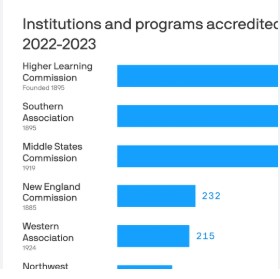
Accreditation is the often unseen backbone of American tertiary education — a vetting mechanism operated not by Washington’s edicts but by independent bodies tasked with affirming institutional integrity.
These watchdogs assess colleges on a mosaic of parameters: pedagogical rigor, faculty credentials, fiscal solvency, governance ethics, and holistic student engagement.
Two principal strands of accreditation exist:
Although ostensibly detached from federal rule, these accrediting bodies are subject to the imprimatur of the U.S. Department of Education. Recognition by the DOE is paramount — only then can institutions unlock federal coffers for student aid programs.
Trump’s Foray into Accreditation Skirmish
A longtime critic of the ivory tower, Donald Trump repeatedly frames academia as a citadel of anti-conservative prejudice.
His speeches brim with admonitions against what he deems “woke indoctrination,” and he’s now turned his rhetorical lens on the accreditation system — alleging it to be an accomplice in ideological engineering.
He posits that these agencies — cloaked in institutional legitimacy — facilitate the erosion of traditional values and suppress intellectual pluralism.
His proposed recalibrations include:
Conditioning accreditation on ideological equilibrium — especially inclusion of conservative viewpoints.
Revoking federal recognition from accrediting entities accused of partisanship.
Tethering institutional funding to demonstrable adherence to ideological diversity protocols.
Political Undertow and the Broader Culture Clash
This audacious pivot is emblematic of a broader ideological crusade. For years, conservative thought leaders have lambasted academia as a monolithic bastion of progressive orthodoxy, unwelcoming to dissenting voices and nationalistic tenets. Trump’s latest offensive on accreditation serves as both a symbolic and tactical strike — targeting the gatekeepers of federal dollars and academic prestige.
Among segments of the Republican base — particularly parents perturbed by perceived cultural reengineering in classrooms — Trump’s focus has found fertile ground.
Repercussions for the Academic Citadel
Should Trump’s vision crystallize into policy, the ramifications could be seismic. Critics argue such federal overreach could inject ideological litmus tests into what was once a rigorously neutral evaluative framework.
Potential consequences include:
Erosion of academic sovereignty: Independent evaluation mechanisms may be compromised by political mandates.
Volatility in oversight: Accreditation standards could become capricious, oscillating with each electoral turnover.
Financial precarity: Institutions failing to conform could forfeit access to vital federal student aid pipelines.
Legitimacy dilemmas: The academic community risks reputational fallout from a perception of politicized credentialing.
They argue that recalibration is overdue to redress entrenched ideological imbalances and ensure diverse thought can flourish.
Constitutional Entanglements and Legal Landmines
Legal sages have sounded alarm bells regarding the potential constitutional quagmires baked into Trump’s proposal. Public universities already carry the constitutional burden to safeguard free speech, but retrofitting accreditation with ideological metrics treads perilously close to state-enforced dogma.
Moreover, the DOE’s jurisdiction is circumscribed — it can recognize accrediting bodies but not anoint universities directly. To overtake the current order would likely necessitate legislative overhaul, fraught with lawsuits from academia and watchdog groups pledging to defend institutional independence.
Academic Aristocracy Responds
Within university halls and national academic guilds, the response has been swift and withering. The Association of American Universities and the American Council on Education have vehemently defended the sanctity of the existing accreditation architecture, citing its rigor, impartiality, and role in preserving educational self-governance.
Voices from faculty senates, student coalitions, and campus administrations echo these concerns. They fear a suffocating climate of self-censorship should accreditation morph into an ideological scorecard. Conversely, a faction of conservative think tanks and academic watchdogs hail Trump’s gambit as a long-overdue insurgency against elite orthodoxy.
Prospects of Implementation: Pragmatic or Pipe Dream?
Despite its headline value, transmuting Trump’s rhetoric into enforceable policy is an uphill battle. Any genuine transformation would demand:
Restructuring how accrediting bodies are federally sanctioned.
Weathering institutional resistance, legal gauntlets, and electoral reversals.
Even if successful, such policies would remain vulnerable to rollback under future administrations — injecting further instability into an already complex system.
Still, Trump’s maneuver has succeeded in yanking accreditation from academic obscurity into the glare of public discourse. It serves as a proxy for a much broader battle — one not just over education but over American cultural identity itself.
FAQs
1. What is university accreditation and why does it matter?
Accreditation ensures schools meet quality standards, giving degrees value and access to federal aid.
2. Why is Trump targeting accreditation now?
He believes it favors liberal institutions and wants more accountability and control.
3. Can the federal government control accreditation?
It can influence but not directly control; most accrediting agencies are private.
4. How could this affect students?
Students could face degrees with less credibility, fewer funding options, or schools with lower standards.
5. Is reform of accreditation necessary?
Many experts agree reform is needed—but opinions differ on how to do it and who should lead it.