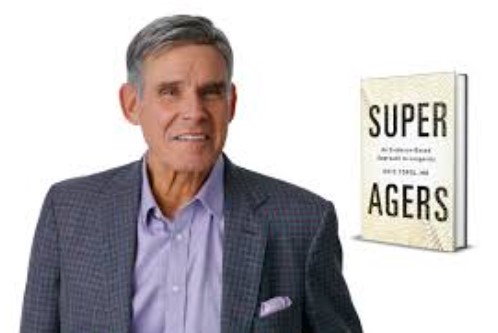
Back in 2007, scientific minds embarked on a quest to decipher the enigmatic constitution of so-called “SuperAgers”—individuals who defy senescence, reaching their 80s with vitality unmarred by degenerative ailments and minds as limber as those of people decades younger.
Was their secret genetic serendipity? Habitual discipline? Fortuitous chance?
Fast-forward nearly twenty rotations around the sun, and the revelations were unanticipated. “We assumed we’d uncover extraordinary genetic signatures,” reveals
Dr. Eric Topol, a venerable cardiologist and progenitor of the Scripps Research Translational Institute—the very team behind this odyssey. “But the genome held fewer secrets than anticipated.”
This eclectic assembly of over 1,000 individuals—averaging 87 years young—earned the moniker “the wellderly,” and their collective portrait redefined the essence of a SuperAger
. Contrary to long-held assumptions, the decisive weight doesn’t lie in DNA, but in lived habits.
“Only a sliver of it—maybe a whisper—is rooted in heredity,” Topol discloses. “Frankly, that was a relief. My lineage is littered with ailments, and realizing I wasn’t inexorably shackled to that fate felt like a small salvation.”
Dr. Topol’s most recent tome, Super Agers: An Evidence-Based Approach to Longevity, is the distilled essence of years immersed in gerontological scrutiny—a manual for achieving greater length and quality of life.
In an era when living longer has been commodified into a wellness gold rush—where diagnostics, biohacks, and snake-oil elixirs cloud the landscape—Topol seeks to illuminate the grounded truths amid the noise. “
There’s an overwhelming tide of pseudoscientific clutter,” he warns, referring to the profiteers peddling dubious scans, subscription supplements, and pharmaceutical potions under the banner of ‘anti-aging.’
His objective isn’t to rewind the mortal clock or gamify aging; it’s to soberly decrease one’s susceptibility to the slow-burning fires of age-born maladies.
Here are three seminal principles gleaned from Topol’s longitudinal investigation of SuperAgers:
1. Can Exercise Transmute Time’s Toll?
Physical movement is no pedestrian prescription—it’s the prime elixir in the arsenal of anti-senescence.
Aerobic and resistance exercises alike weave a protective net around the heart, invigorate cognitive faculties, and anchor the body against frailty’s creeping grasp.
“Exercise is alchemical. It counters the triad of mortality: cancer, cardiac collapse, and cognitive corrosion,” declares Topol. The immune system, he emphasizes, finds its strongest ally in consistent movement.
Though he’s always extolled the virtues of cardio, Topol now urges the integration of resistance training—grip-strength drills, muscle fortification regimens, and balance-enhancing motions—as armor against sarcopenia and ossature erosion.
2. Can the Mediterranean Table Delay Decline?
The culinary blueprint found in the Mediterranean—lush in fibrous fruits, chromatic vegetables, lean meats, seeds, legumes, whole grains, and the golden elixir of olive oil—sits atop the dietary pantheon.
According to Topol, its shield against age-linked deterioration is unparalleled.
“It’s our most empirically validated nutritional paradigm,” he attests. Research corroborates its efficacy in bolstering cerebral, cardiovascular, and skeletal vitality—while dialing down oncological threats.
Crucially, the diet casts out the insidious specter of hyper-processed edibles—those “UFOs of nourishment,” as Topol dubs them. These edible imposters, when ingested routinely, ratchet up the odds of stroke, heart disease, and premature demise.
3. Embrace Foreknowledge Through Preventive Screening
Diseases of aging don’t erupt overnight—they incubate in silence for decades. Yet multitudes remain oblivious to the threats coiled within.
“How can we refine our foresight,” Topol queries, “to know not just if—but when, who, and what to expect?”
He envisions a near-future where preemptive diagnostics are not a luxury, but the norm. In a system traditionally designed to triage illness post-manifestation, this paradigm pivots to strategic anticipation.
If an individual discovers heightened risk for neurodegeneration, say, via a molecular scan or biomarker assay revealing amyloid accumulations, they might be galvanized to recalibrate their lifestyle before affliction crystallizes.
“We’re on the brink of preempting fate,” Topol asserts. “Preventive mastery is the next frontier—one that can rewrite the human experience of aging.”
Related Inquiries into Longevity:
- New Data Debunks Taurine’s Alleged Life-Extending Potency
- 30-Year Study Finds Daily Coffee May Prolong Mental Acuity
- Avoid the ‘Poisonous 5 P’s,’ Warns Global Aging Authority, to Cultivate Endurance
FAQs
1. What’s the best age to start living like a SuperAger?
Any age! The earlier, the better—but even starting in your 60s or 70s can deliver massive health benefits.
2. Can SuperAger habits reverse aging signs?
They can slow or even partially reverse cognitive and physical decline—especially in brain health and mobility.
3. How much exercise is ideal?
Aim for 150 minutes of moderate aerobic activity weekly—plus 2 sessions of strength training.
4. Do supplements help with SuperAging?
Only if your diet lacks key nutrients. Whole foods should be your first choice.
5. What role does sleep play in SuperAging?
Massive! Poor sleep is linked to memory loss, heart disease, and shortened lifespan. Prioritize 7–8 hours nightly.